Business Name: BeeHive Homes of White Rock
Address: 110 Longview Dr, Los Alamos, NM 87544
Phone: (505) 591-7021
BeeHive Homes of White Rock
Beehive Homes of White Rock assisted living care is ideal for those who value their independence but require help with some of the activities of daily living. Residents enjoy 24-hour support, private bedrooms with baths, medication monitoring, home-cooked meals, housekeeping and laundry services, social activities and outings, and daily physical and mental exercise opportunities. Beehive Homes memory care services accommodates the growing number of seniors affected by memory loss and dementia. Beehive Homes offers respite (short-term) care for your loved one should the need arise. Whether help is needed after a surgery or illness, for vacation coverage, or just a break from the routine, respite care provides you peace of mind for any length of stay.
110 Longview Dr, Los Alamos, NM 87544
Business Hours
Monday thru Sunday: 9:00am to 5:00pm
Facebook: https://www.facebook.com/BeeHiveWhiteRock
YouTube: https://www.youtube.com/@WelcomeHomeBeeHiveHomes
Families rarely prepare for assisted living in one neat step. They show up there after many small choices, some immediate, some reluctant, frequently starting with a time-out called respite care. I have actually enjoyed those trial stays develop into confident long-term relocations more times than I can count. Not since anyone gets pressured, but since the experience offers individuals real data about fit, security, and quality of life. When it works, the transition feels less like surrender and more like the right next chapter.
This is an account of how and why that shift takes place, where it can go wrong, and what families can do to take advantage of a momentary stay. It includes information drawn from years of strolling the halls of senior living communities, sitting at cooking area tables with families, and learning from citizens who are generous with their stories.
Why respite care changes the conversation
Respite care is short-term assistance provided in a senior living setting. An individual may remain a week after a health center discharge, 2 weeks while a spouse recovers from surgical treatment, or a month while the family trials a brand-new routine. Some communities offer supplied houses for these stays. Services typically mirror what long-lasting residents get: meals, housekeeping, medication hints or administration, assist with bathing and dressing, plus access to activities and transportation.
The shift happens because respite care turns hypotheticals into lived experience. A household no longer has to envision whether Mom will take to group workout or accept aid with showers. They see precisely how she reacts to the 7 a.m. breakfast call, who she sits with at lunch, and whether personnel follow the care strategy. Uncertainty is tiring. After a week in respite care, the unknowns get replaced with specifics, which reduces tension and makes decisions both clearer and kinder.
I keep in mind one gentleman who was available in hesitant, travel suitcase packed with sufficient sweatshirts to reveal his skepticism in layers. He planned to stay 10 days while his daughter took a trip. By day three he had actually claimed the chair by the aquarium as "his newsroom," chatted with the concierge about baseball box ratings, and asked if his shaving cream might be stored on the best side of the medication cabinet. Ownership is a tell. It shows up in little ways long before anyone states the words "I believe I might live here."
The useful bridge: what short-term stays reveal about long-term fit
Families ask variations of the exact same concern: Will this work if we stay? Respite care yields answers in four practical domains.
The initially is care reliability. If medication administration is arranged for 8 a.m. and 8 p.m., does it take place on time, regularly, without Mom feeling hurried? Staffing patterns vary by community and time of day. A a couple of week stay exposes the real cadence, not just the sales brochure pledge. Look for connection across shifts and weekends, not simply the warm welcome on day one.
Second is scientific skills. Chronic conditions seldom behave. Watch how the nurse reacts to a blood pressure spike or to early indications of a urinary system infection. Ask what the escalation path appears like after hours. Little distinctions here matter. A neighborhood that flags changes quickly and communicates clearly can avoid hospitalizations, which is both much safer and kinder to a resident's routine.

Third is social engagement. Activities calendars are marketing documents. The real test is involvement and personnel interest. Do homeowners linger after trivia due to the fact that they delight in each other, or do they wander back to rooms instantly? In assisted living and memory care, mood and engagement associate with health. I have seen hunger enhance just due to the fact that lunch includes familiar faces and a predictable table.
Fourth is environmental ease. Corridor length, lighting, sound levels, and the location of restrooms all affect everyday tension, specifically for those with early cognitive changes. During respite care, note whether your loved one navigates without anxiety. If they require memory care now or in the future, ask to observe that neighborhood too. Excellent style supports self-reliance: contrasting colors for depth perception, clear wayfinding, and hints that do not insult dignity.
Respite care likewise checks the family fit. Can you reach the nurse when you call? Do you get one voice or a chorus of contrasting messages? You will understand by the third voicemail whether the communication culture matches your expectations.

The emotional mathematics behind an effective transition
Data helps, but feelings drive staying or leaving. A person who has held fast to home for years requires something beyond logic to consider a move. Respite care can provide that in two methods: relief and respect.
Relief shows up as less friction in daily jobs. A resident stops combating the shower when help comes from a calm professional instead of a worried child. A partner sleeps through the night because somebody else watches for roaming. Relief is not fancy, but it is extensive. By day five, households frequently say a variation of, "I didn't recognize just how much we were all bring."
Respect is the distinction between care that lands and care that backfires. Staff who introduce themselves, ask permission before assisting, and find out regimens construct trust rapidly. A gentleman who constantly used a fedora to church will respond better to support that notices and mirrors that identity. Among the most effective caretakers I know starts each early morning with, "How do you wish to start your day?" It appears easy, however that sentence is a world far from, "Time for your shower."
When relief and regard both show up, fear loses its grip. Individuals stop reacting to the abstraction of "assisted living" and react to the particular community in front of them. They measure dignity acquired against self-reliance traded and typically discover the scales more well balanced than expected.
Assisted living or memory care: how respite clarifies the best setting
Families often arrive demanding assisted living, then find throughout respite that memory care much better matches requirements. Other times they fear memory care however discover that assisted living with targeted assistances works fine. The brief stay helps you see whether obstacles are primarily physical or cognitive.
If the main concern is sequencing tasks or handling time, the cueing and structure in assisted living may be enough. If your loved one gets lost in familiar areas, loses items in dangerous methods, or experiences sundowning, the safe and secure environment and specialized personnel training in memory care end up being the safer choice. In neighborhoods with both choices, I have actually seen residents begin with a respite in assisted living and, with everyone's contract, switch mid-stay to a memory care trial. That side-by-side contrast is invaluable.
A note about preconception: memory care is not a locked ward in the old sense. The very best programs feel dynamic and calm simultaneously, mixing freedom within protected borders. Search for small-group activities, sensory engagement like baking or gardening, and staff who understand each person's history. A respite in memory care should never seem like a charge box. It must seem like a community constructed for success.
What expenses appear like and how to think of value
Respite care is generally priced as a day-to-day or weekly rate that packages rent, fundamental care, and meals. Rates differ widely by area and level of care. In lots of markets, a respite day in assisted living runs approximately 2 to 3 times the prorated day-to-day lease due to included staffing, supplied units, and flexibility. Memory care is higher due to the fact that staffing ratios are tighter and training more specialized. Some neighborhoods require a minimum stay, typically 7 to 14 days.
Insurance seldom covers room and board in senior living. Long-term care insurance might repay respite days if the policy acknowledges short-term stays and the individual fulfills criteria for help with activities of daily living. Veterans and enduring partners often qualify for Help and Presence, but that is not developed for short bursts. Medicare does not spend for assisted living, though it can cover experienced home health throughout a stay if ordered by a physician. Ask the neighborhood to provide a detailed respite contract and confirm what is included, such as medication management and transport, versus what is billed as an add-on.
Value ends up being clear when you compare expenses to outcomes. A safe healing after a fall might depend upon 24-hour oversight, constant hydration, and prompt meds. If respite prevents a readmission, the savings and health benefits are not theoretical. For caretakers, the worth consists of rest that avoids burnout. A partner who finally sleeps through the night for ten nights is a much better spouse for 10 months.
The signals that a respite stay is working
Success leaves traces. You might see your loved one asking about tomorrow's menu, remembering a staff member's name, or correcting the alignment of images in the house like it comes from them. Hunger typically informs the story. Individuals who select at food in the house might clean their plate when meals are social and served hot without hurry.
Staff observations matter. When an assistant states, "She's more talkative after morning exercise," that is an information point you can build regular around. Likewise, if your loved one declines showers other than with a particular caretaker, you can arrange that person for connection. The very first week is not the whole story. It frequently takes 10 to fourteen days for a brand-new pattern to emerge, particularly after a healthcare facility stay.
Families change too. I see shoulders drop in the lobby when the regret alleviates. Disputes over easy jobs decline because those jobs no longer belong to the relationship. You go back to being a daughter or partner more than a drill sergeant. If you find yourself eagerly anticipating going to instead of fearing the day, take note. That is an indication the plan fits.
When the respite stay exposes a mismatch
Sometimes respite care clarifies that a specific neighborhood is not the best fit. The most typical reasons:
- Care follow-through is irregular throughout shifts, specifically nights and weekends. The social environment skews too peaceful or too loud for your liked one. Communication with the family is sluggish or unclear, causing duplicated confusion. The physical design increases stress and anxiety, such as long corridors for somebody with minimal endurance. Cost escalates with add-ons that should have been transparent, eroding trust.
A mismatch does not condemn the design, just the fit. Ask for a discharge summary and take notes on what worked and what did not. Then go for a neighborhood that deals with the gaps rather than deserting the concept of assisted living or memory care totally. I have relocated locals who stopped working in one structure and grew in another 2 miles away since the activity style or staffing culture aligned better with their personality.
Preparing for a brief stay that establishes long-lasting success
Preparation lowers bumps and magnifies insight. A little effort before admission pays dividends during the stay. Focus on three locations: details, environment, and expectations.
Start with information. Supply an extensive history that includes more than medical diagnoses. Share what a great day looks like, what triggers disappointment, and how your loved one prefers to be dealt with. Bring medication lists with exact dosing times, the contact info for professionals, and any recent medical facility discharge summaries. Ask for the community's preferred drug store to prevent delays.
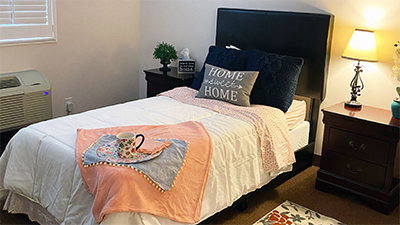
Shape the environment. Familiarity reduces stress and anxiety. Pack pictures, a preferred blanket, a clock with large numbers, and clothing labeled by day to simplify dressing. For memory care respite, pick products with clear function and low complexity. Simplify the bathroom setup. If curling irons or electric razors produce confusion, leave them home.
Set expectations. Describe to your loved one that the stay is time-limited, a possibility to build strength or to rest while family regroups. Even when memory is unreliable, tone interacts respect. Inform personnel what success suggests to you: fewer falls, much better cravings, a full night's sleep. Then request a check-in at 2 days, one week, and before discharge.
The relocation from respite to house: how to handle the moment of choice
At completion of respite, households frequently face a choice that feels less significant than they feared. If remaining makes sense, the logistics are simple: transform the respite arrangement to a residency agreement, schedule a move-in date, and complete customized service plans. The individual currently understands the layout, the personnel, and the rhythm. The apartment or condo can be the same unit, which reduces adjustment time.
If you are unsure, a second short stay can be useful, specifically if the very first occurred throughout a medically complex period. I have actually seen households string two two-week stays around a trip and a surgical treatment, gathering adequate experience to commit with self-confidence by the end.
When the response is no, leave with gratitude and specifics. The insights will assist the next search. Ask the nurse to summarize what worked and what did not in composing. Keep any new routines that worked, such as a med schedule or bedtime rhythm that relaxed sundowning.
The special case of couples and the role of respite in complex family dynamics
Couples often withstand moving due to the fact that separation feels unimaginable. Respite can help chart a course. One method is a short-term stay for the partner who needs more care, paired with day-to-day visits and shared meals. Another is a visitor suite trial for the healthy partner throughout the respite, testing whether they might live on-site together. Communities with both assisted living and memory care sometimes put couples in surrounding communities, collaborating meals and time together with personnel help. The plan is not best, but it preserves partnership within appropriate care boundaries.
Family dynamics complicate whatever. Brother or sisters disagree. Adult kids have a hard time to move from "assisting" to "changing course." A short-term stay makes the conversation less theoretical and more observable. Instead of arguing about what may take place, you can talk about what did take place over fourteen days and whether it felt sustainable.
Staff training and culture: the unglamorous predictor
Brochures speak about features. Results hinge on personnel training and culture. Ask about onboarding for brand-new assistants, ongoing dementia education, and how the team debriefs after an occurrence like a fall. View handoffs between shifts. In strong neighborhoods, info streams smoothly, the mood is purposeful without rush, and leaders know homeowners by name and story. Throughout respite, you will see whether call lights get the answer within a sensible time across the board, not simply when supervisors are present.
Turnover is real in senior living. Do not anticipate zero. Rather, look for a pattern of retention amongst core personnel and proof that new staff member are supported. A neighborhood that purchases mentorship programs and recognizes assistants publicly tends to provide more consistent care. During respite, the evidence is basic: your loved one's days feel foreseeable and respectful, no matter who is on duty.
Risk, autonomy, and the art of negotiated safety
Assisted living and memory care both run at the crossway of autonomy and security. Respite care lets families see how a community practices worked out danger. Will they let Dad keep shaving with a security razor under guidance, or do they demand electric just? Can Mom bring her lap dog if she reliably handles feeding and walks, with backup in the care strategy? The answers specify daily life.
When policies are stiff without reason, citizens feel managed instead of supported. When guidelines flex thoughtfully, locals stay themselves. The very best neighborhoods discuss their reasoning, document arrangements, and revisit them as conditions alter. Throughout respite, ask to be part of those conversations. You will learn quickly whether the team treats your loved one as an individual first and a liability second.
What success looks like months later
I keep psychological snapshots of locals 6 months after respite turned into residency. The previous engineer who now "consults" on jigsaw puzzles each afternoon. The retired teacher who runs a poetry circle for six neighbors, two of whom had not read aloud in years. The caregiver partner who comes for breakfast at 8, leaves for tai chi at 10, and returns for a long walk at 2, resting without regret at night.
Success is not the absence of decrease. Aging continues. Success looks like less crises, steadier regimens, less seclusion, and a family that can be family again. It sounds like laughter over coffee instead of apologies during baths. It reads in the chart as steady weight, fewer UTIs, and one hospitalization in a year rather of four.
A reasonable path forward
Respite senior care care is not a technique to make people accept assisted living. It is a test drive, sincere and useful. Succeeded, it honors autonomy, surfaces what matters, and reduces the temperature on hard choices. If you think about a short stay, be clear on objectives, pack pieces of home, and view the little things that expose culture. If the fit is right, transforming to long-term residence will feel like calling what is currently true: your loved one has found comfort in a location created for their requirements, and you have found the ideal kind of help.
For households navigating memory care, the same reasoning applies with added attention to environment and staff ability. For those stabilizing costs and benefits, judge by outcomes you can see, not just line products on a statement. And for caregivers who feel torn, allow yourself the relief that respite can bring. Rest is not a luxury. It is a tool that keeps love durable.
Assisted living and memory care belong to the same landscape. Respite care is the bridge between the map and the road. When you stroll it, you understand where to turn.
BeeHive Homes of White Rock provides assisted living care
BeeHive Homes of White Rock provides memory care services
BeeHive Homes of White Rock provides respite care services
BeeHive Homes of White Rock supports assistance with bathing and grooming
BeeHive Homes of White Rock offers private bedrooms with private bathrooms
BeeHive Homes of White Rock provides medication monitoring and documentation
BeeHive Homes of White Rock serves dietitian-approved meals
BeeHive Homes of White Rock provides housekeeping services
BeeHive Homes of White Rock provides laundry services
BeeHive Homes of White Rock offers community dining and social engagement activities
BeeHive Homes of White Rock features life enrichment activities
BeeHive Homes of White Rock supports personal care assistance during meals and daily routines
BeeHive Homes of White Rock promotes frequent physical and mental exercise opportunities
BeeHive Homes of White Rock provides a home-like residential environment
BeeHive Homes of White Rock creates customized care plans as residents’ needs change
BeeHive Homes of White Rock assesses individual resident care needs
BeeHive Homes of White Rock accepts private pay and long-term care insurance
BeeHive Homes of White Rock assists qualified veterans with Aid and Attendance benefits
BeeHive Homes of White Rock encourages meaningful resident-to-staff relationships
BeeHive Homes of White Rock delivers compassionate, attentive senior care focused on dignity and comfort
BeeHive Homes of White Rock has a phone number of (505) 591-7021
BeeHive Homes of White Rock has an address of 110 Longview Dr, Los Alamos, NM 87544
BeeHive Homes of White Rock has a website https://beehivehomes.com/locations/white-rock-2/
BeeHive Homes of White Rock has Google Maps listing https://maps.app.goo.gl/SrmLKizSj7FvYExHA
BeeHive Homes of White Rock has Facebook page https://www.facebook.com/BeeHiveWhiteRock
BeeHive Homes of White Rock has an YouTube page https://www.youtube.com/@WelcomeHomeBeeHiveHomes
BeeHive Homes of White Rock won Top Assisted Living Homes 2025
BeeHive Homes of White Rock earned Best Customer Service Award 2024
BeeHive Homes of White Rock placed 1st for Senior Living Communities 2025
People Also Ask about BeeHive Homes of White Rock
What is BeeHive Homes of White Rock Living monthly room rate?
The rate depends on the level of care that is needed (see Pricing Guide above). We do a pre-admission evaluation for each resident to determine the level of care needed. The monthly rate is based on this evaluation. There are no hidden costs or fees
Can residents stay in BeeHive Homes until the end of their life?
Usually yes. There are exceptions, such as when there are safety issues with the resident, or they need 24 hour skilled nursing services
Do we have a nurse on staff?
No, but each BeeHive Home has a consulting Nurse available 24 – 7. if nursing services are needed, a doctor can order home health to come into the home
What are BeeHive Homes’ visiting hours?
Visiting hours are adjusted to accommodate the families and the resident’s needs… just not too early or too late
Do we have couple’s rooms available?
Yes, each home has rooms designed to accommodate couples. Please ask about the availability of these rooms
Where is BeeHive Homes of White Rock located?
BeeHive Homes of White Rock is conveniently located at 110 Longview Dr, Los Alamos, NM 87544. You can easily find directions on Google Maps or call at (505) 591-7021 Monday through Sunday 9:00am to 5:00pm
How can I contact BeeHive Homes of White Rock?
You can contact BeeHive Homes of White Rock by phone at: (505) 591-7021, visit their website at https://beehivehomes.com/locations/white-rock-2/, or connect on social media via Facebook or YouTube
Located near Beehive Homes of White Rock Dreamcatcher a great movie theater with full food & drink menu. Catch a movie and enjoy some great food while you wait.